
How to Get Junk Removal Leads in 2026
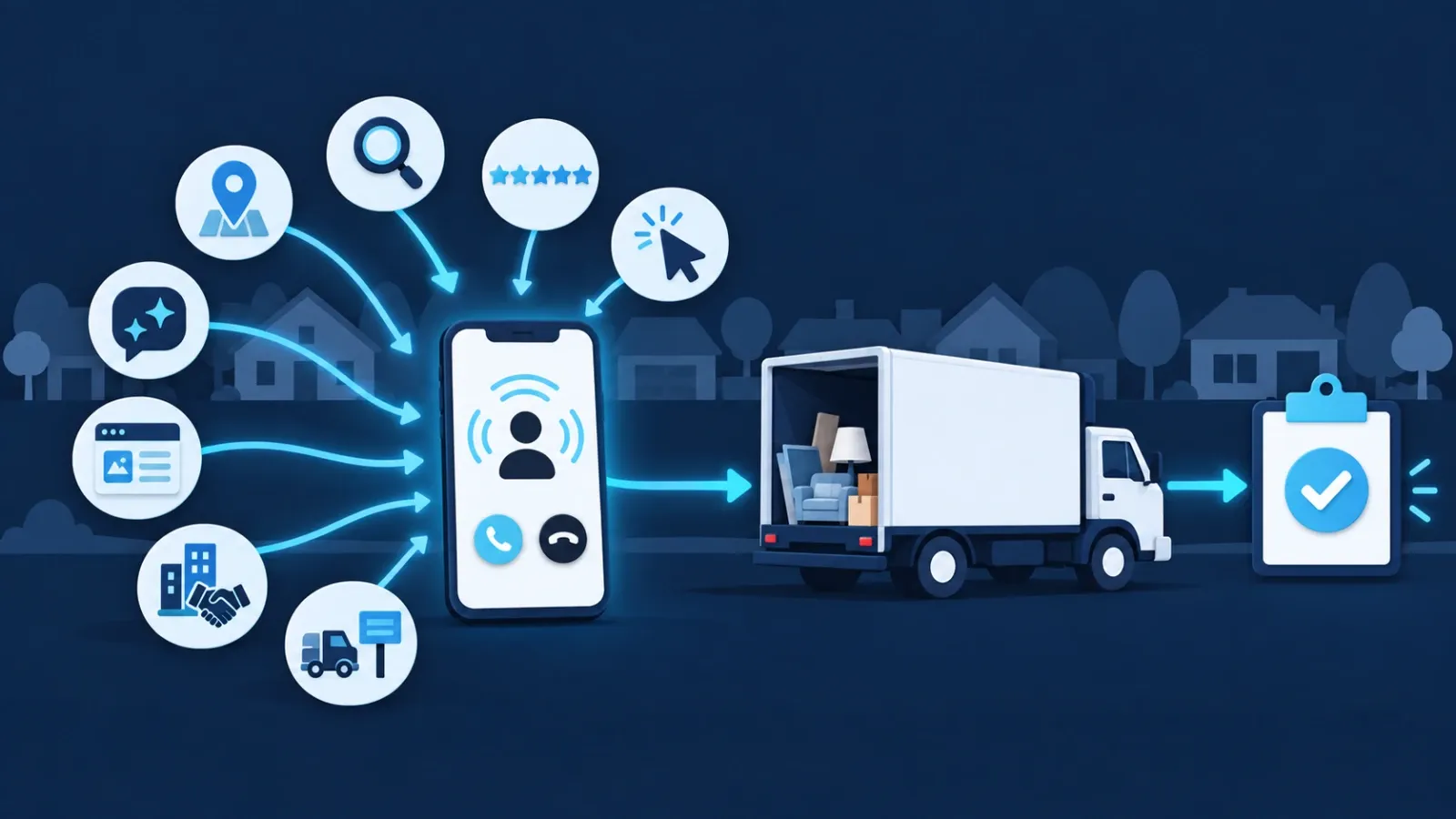
A homeowner in your service area just typed “junk removal near me” into their phone. Three things can happen next, and only one of them ends with your truck in their driveway.
They tap the franchise name they already recognize. They tap the first Local Services Ad. Or they never leave Google at all, because an AI answer already picked somebody for them.
That third option barely existed when we first published this post in 2023. It is now the default outcome of a Google search.
So this is a rewrite, not a refresh. The channels that filled a junk removal schedule three years ago still work, but the rules around them moved, and two of the biggest changes land this year.
Here is what is working in 2026, in the order I would build it. The short version of how we assemble these for a hauler lives on our junk removal marketing page.
Stop Counting Leads. Start Counting Booked Jobs.
Cost per lead tells you almost nothing about a junk removal business.
Your job values swing from a $150 single-item pickup to a $4,000 estate cleanout. A channel at $40 per lead can lose money while a channel at $90 prints it. The average hides both.
The number that matters is total channel spend divided by the jobs that channel booked.
Compare that against your average ticket and your gross margin on that ticket. Now you know whether to feed the channel or shut it off.
Most junk removal owners I talk to know their margin per job cold and have no idea what it costs them to get one.
Three things have to be in place before any channel below can be judged honestly:
- A unique tracking number per channel, not one number sitting on the whole website
- Form submissions tagged with the source that sent them
- A field in whatever you dispatch with that records whether a lead turned into a job
Without those, you are buying leads and guessing. Our growth calculator will run the arithmetic once you have the inputs.
1. Google Business Profile Is Still the Cheapest Truck on the Road
Your Business Profile is the most valuable free asset you own, and it got more important in 2026, not less.
Whitespark surveyed 47 local search professionals for its 2026 Local Search Ranking Factors report. The top individual factors for the map pack were your primary category, the searcher’s proximity to you, and keywords in your business name.
One new entry is worth your attention: whether your business is open at the time of the search.
That is a scheduling decision, not a marketing one. If you close at 4pm and your competitor answers until 8pm, Google now has a reason to show them instead of you at 5:30.
What to fix this week
- Set the primary category to Junk Removal Service. Test it against Garbage Collection Service and Debris Removal Service, and watch which one holds.
- Add every service you sell as a separate service item, each linked to its own page on your site.
- Upload real job photos every week. Before and after shots of a garage, a basement, a hoarding cleanout. Never stock images.
- Get the service area right. Listing forty towns you will not drive to costs you relevance in the ten you actually want.
- Keep hours accurate, including holidays.
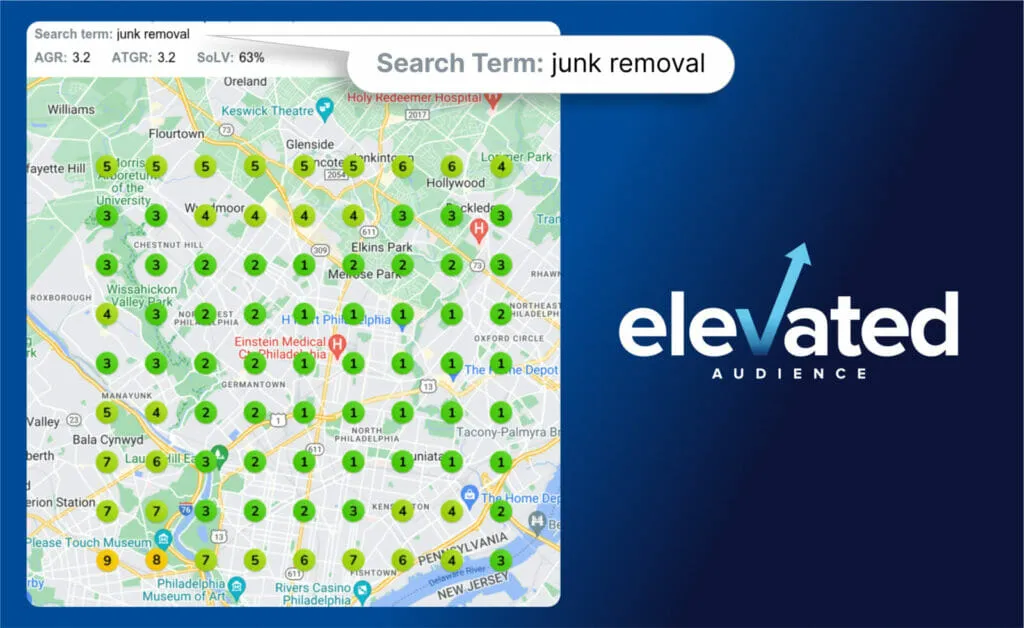
Do not measure this with a single rank check from your office. Your ranking changes block by block. A geo-grid tool shows you where you actually appear across the map, which is the only view that means anything for a service-area business.
There is more on the mechanics in our guide to junk removal SEO and on our local SEO page.
2. The Review Bar Moved, and Incentives Will Now Get You Wiped
Reviews are no longer a tiebreaker. They are a filter, and the filter got tighter.
BrightLocal published its Local Consumer Review Survey 2026 in February, from a panel of 1,002 US consumers. It found that 31% of people will only use a business rated 4.5 stars or higher. A year earlier that figure was 17%.
Recency matters just as much. 74% of consumers want to see reviews written in the last three months, and 18% only count reviews from the last week.
A 4.9 average built three years ago reads as a closed business.
That makes review velocity a weekly operating habit, not a campaign you run once.
The part of the 2023 version of this post I need to correct
The old version of this article suggested offering small incentives to collect reviews. That advice is wrong now and it was risky then.
Google treats incentivized reviews and review gating as deceptive content. When it catches either one, it does not remove the offending review. It can remove every review the profile ever earned.
We will not buy reviews for a client even when they ask, and you should not run an offer that quietly does the same thing.
What actually works
Ask at the moment the job ends and the customer is standing in a clean garage.
Send the request by text while your crew is loading up, with a direct link to the review form. Do not ask them to search for you. Do not batch requests into a monthly blast.
Then reply to every review, including the bad ones. Our reputation management page covers how we run that on a schedule.

3. Local Services Ads: Eligible, Underused, and Changing This Year
Junk removal is an eligible Local Services Ads category in the US, which means you can carry the Google Guaranteed badge and pay per lead instead of per click.
Plenty of haulers still assume LSAs are only for plumbers and electricians. They are not, and the auction in most junk removal markets is thinner than it is in the licensed trades.
Worth knowing before you plan around it: dumpster rental on its own is not an eligible category. If rentals are your whole business, Search and your Business Profile are the route.
The platform change landing this year
Google is moving Local Services Ads into Google Ads as a Performance Max campaign with a pay-per-lead goal. The standalone LSA dashboard goes away.
The first wave started in August 2026 and covered plumbing, HVAC, electrical, appliance repair, house cleaning, lawn care, roofing, pest control and moving. Junk removal is not on that list, so your migration lands later in 2026 with the broader group.
That gap is a gift. You get to watch the trades ahead of you absorb it.
Here is what changes and what does not.
| Stays the same | Changes |
|---|---|
| You pay per lead, not per click | Management moves into the Google Ads interface |
| Ads show on Search and Maps only | Manual bidding and vertical-level target CPA are retired |
| Targeting stays keywordless, by category and service area | Weekly budgets convert to daily averages |
| The Google Guaranteed badge | Better Business Bureau callouts are no longer supported |
Two action items. Download your historical LSA reports before the migration, because that data does not carry across. And rebuild the trust signals you were leaning on the BBB callout for, using hours, specialties and accepted payment methods instead.
Our Local Services Ads page covers how we run the account itself.
From October 1, a missed call can cost you money
This is the change nobody in the trade is talking about yet, and it is the one that will sting.
From October 1, 2026, Google charges you for a missed Local Services Ads call during your stated business hours if the caller stays on the line longer than 20 seconds.
Read that again. Not a booked job. Not even a conversation. Twenty seconds of ringing.
If your phone rolls to voicemail at 2pm on a Tuesday, you now pay for that voicemail.
Two details worth knowing:
- If your phone system makes callers press a key to reach a department, the 20 second clock does not start until they press it. If they never press it, you are not charged.
- Follow-up calls with the same person inside 15 days are charged once, not every time.
There is an obvious way to avoid this, and it is not a marketing tactic. Answer the phone, or set your LSA hours to the hours you actually answer.
LSAs reward operations, not marketing. Do not turn them on until section six is handled.
4. Google Search Ads Still Buy the Fastest Jobs
Search Ads remain the fastest way to put work on tomorrow’s board, and they are the channel I see wasted most often.
LocaliQ benchmarked 3,211 US home services search campaigns running from April 2024 to March 2025. The average cost per click came in at $7.85, and the average cost per lead at $90.92.
Junk removal was not one of the sixteen categories it measured, so treat those as the shape of the market rather than your number.
Costs are climbing across home services, which makes waste more expensive than it used to be.
Negative keywords are the whole game
In some parts of the country, “trash pickup” means junk removal. In others, it means the municipal collection schedule.
You do not want to pay $9 a click for somebody looking up which day the township takes the bins.
Start your negative list on day one:
trash pickup schedule,trash day,bulk trash,township,borough,city offree,donate,donation pickup,how to dispose ofjunkyard,scrap yard,dump near me,landfill hoursjobs,hiring,salary,franchise for sale,business for sale
Then add the franchise names. Bid on them deliberately if you want that fight, but never by accident through broad match.
What to watch in your account right now
Google began auto-upgrading Search campaigns that use automatically created assets or the campaign-level broad match setting to AI Max in September 2026. AI Max expands your targeting past your keywords using Google’s own matching.
That can be fine. It can also start buying you “dump near me” at scale.
Check whether your campaigns got moved. If they did, you can toggle the AI Max settings off, and you can uncheck text customization under the asset optimization panel.
Either way, read your search terms report weekly for the next two months and keep your negative list current. More structure on this is in our Google Ads page and in the 10 strategies in our junk removal marketing guide.
5. Get Quotable by AI, Because That Is Where the Click Went
This is the channel that did not exist in the 2023 version of this post, and it is now the reason the other channels feel harder.
SparkToro’s analysis of Similarweb clickstream data found that 68.01% of US Google searches ended without a click in the first four months of 2026, up from 60.45% in 2024.
Pew Research tracked the browsing of 900 US adults. People clicked a traditional result on 8% of searches that showed an AI summary, against 15% of searches that did not.
And in that same BrightLocal survey, 45% of consumers said they now use AI tools to find local businesses. The year before, that number was 6%.
Being named inside the answer is now worth more than ranking under it.
What makes a hauler quotable
AI systems name businesses they can describe with confidence. That is the whole mechanic. Ambiguity gets you left out.
- Publish real prices. A truckload range, a minimum charge, a single-item price. Most of your competitors refuse, which is exactly why you should.
- Answer the questions people actually ask. What fits in a half load. What you will not take. Whether you handle a hoarding situation. Whether somebody has to be home.
- Give every service its own page. One page trying to cover appliance removal, estate cleanouts and construction debris is describable by nobody.
- Claim Bing Places. ChatGPT’s search leans on Bing’s index, and most local businesses have never touched it.
- Ship LocalBusiness and FAQPage schema so the facts are machine-readable rather than inferred.
Reviews feed this too. An AI reading fifty detailed reviews about a same-day sofa pickup learns something a star rating cannot tell it.
Our AI search optimization page covers how we build this out.
One more thing Google now does on the customer’s behalf
Google can place an automated call to a local business to confirm a price or availability for a searcher, in select home service categories.
Read that again. Google may call you, and whatever your front desk says becomes the answer the customer sees.
If nobody picks up, Google has nothing to tell them about you.
6. Answer the Phone, and Put a Number on the Website
Every channel above dies at the same place. The phone.
Junk removal buyers do not wait. They are standing in a garage they want emptied this week, and the first company that answers with a real number usually books it.
This is also the complaint I hear from junk removal owners more than any other. Every call opens with “how much is it.” If you will not say, they hang up and call the next listing.
Two fixes, in order
Fix the answer rate first. Missed calls during your own business hours are the most expensive thing in this article. You paid for that lead in every channel above and got nothing back. Track them properly, too. Not the ones you feel like you missed, the ones a report shows you missed.
Inbound Intel AI, our call tracking and attribution platform, exists to answer one question: did marketing fail, or did the front desk lose the call? Those are different problems with different fixes, and most reports cannot tell them apart.
Then put a price on the site. A range, a calculator, an instant estimate. Something that lets the person who only wanted a number get one at 9pm without you on the phone.
After installation, Instant Estimator AI lifted conversion rates 40% to 60% for the contractors running it.
You do not need our tools to do this. You need the price to exist somewhere a customer can reach without a phone call.
7. Commercial Accounts Do Not Depend on an Algorithm
Every channel so far can be taken from you by a Google update. Commercial accounts cannot.
One property manager with a few hundred doors sends turnover cleanouts every single month. That is scheduled revenue you can staff against, instead of hoping Saturday fills.
Your list is short and local:
- Property managers and apartment communities, for unit turnovers
- Realtors, for pre-listing and estate cleanouts
- General contractors and remodelers, for jobsite debris
- Storage facilities, for abandoned units
- Estate attorneys and senior move managers
Why most haulers say outbound does not work
Because they send one email and stop.
Commercial buyers are not searching when your email lands. They are dealing with something else. The account comes from being the name they remember in six weeks, when a tenant leaves a unit full of furniture.
Build a five or six touch sequence across three weeks. Email, a call, a drop-in with a card at the leasing office, another email. Then put them on a quarterly list.
Price it as a standing account with agreed rates and a response window, not as a one-off haul with a discount. That is a different conversation and it closes differently.
8. Trucks, Signs and Door Hangers: Brand, Not Leads
Offline still works. It just does not do what most owners think it does.
A wrapped truck, a yard sign at a job site, a door hanger on the block you just worked. None of these generate measurable leads. They make your name familiar so that when somebody does search, yours is the one they recognize.
That matters more than usual in this trade, because you are competing with franchise names people already know.
Treat it as brand spend with a measurement wrapper:
- Put a dedicated tracking number on the truck and the signs, different from the website number
- Put a short vanity URL or QR code on door hangers so you can count scans
- Work the block. Hang the neighbors after every job, while the truck is still parked there
Do not expect these to show up in your cost per booked job math. Expect them to make every other channel cheaper.
Where the Channels Actually Sit
| Channel | First job | Best for |
|---|---|---|
| Google Business Profile | 2 to 8 weeks | Everyone. Start here. |
| Reviews | Ongoing | Conversion on every other channel |
| Local Services Ads | Days | Filling this week, if you answer fast |
| Google Search Ads | Days | Controlled volume, specific services |
| AI search visibility | 2 to 4 months | Where the searches are going |
| Website and instant pricing | Immediate | Capturing the price shoppers |
| Commercial accounts | 1 to 3 months | Predictable monthly revenue |
| Truck wraps and signs | Slow | Name recognition against the franchise |
Only two of those eight are rented. Everything else is an asset you keep, and it keeps working the month you stop paying for ads.
Shared lead marketplaces are not on this list on purpose. They sell the same homeowner to four of your competitors, and the margin math almost never survives it. We wrote up the full walkthrough in why buying shared leads is killing your margins.
If You Are Starting Monday
Pick the top of this list and work down. Do not start five channels at once.
- Fix the Business Profile. Category, services, service area, hours, photos.
- Put a review request into the end of every job, by text, same day.
- Get call tracking on the site so the rest of this is measurable.
- Put a price range on the website where a customer can find it.
- Turn on one paid channel, not two. Local Services Ads if you answer live, Search Ads if you want tighter control.
- Build the commercial list while the paid channel runs.
That order is deliberate. Every step makes the next one cheaper.
Elevated Audience has generated more than $80M in annual revenue for our home service clients, and we hold a 97% client retention rate. Nick Tellie at We Love Junk put his results more plainly than I can:
“Business has gone through the roof.”
Programs start at $2,495 per month with no setup fee and no contract. Ad spend stays in your own accounts, and you own every asset we build: the website, the analytics, the ad accounts, the call data. If we have not produced qualified leads within 60 days, your next month is free.
If you want a look at where your own leads are coming from before you commit to anything, run our free website performance report or call (267) 217-3155.
Frequently Asked Questions
How much do junk removal leads cost?
There is no reliable per-lead price for junk removal, and anyone who quotes you one is guessing. Cost depends on your market, the service, whether the lead is exclusive, and how fast you answer.
Judge a channel on cost per booked job instead. Divide everything you spent in that channel by the jobs it actually booked, then weigh that against your average ticket and your margin on it.
What is the best lead generation for a junk removal business?
Your Google Business Profile, because it is free, it sits above the organic results, and in 2026 it also feeds the AI answers that pick businesses for people. After that, Local Services Ads and Google Search Ads buy demand you have not earned organically yet. Commercial accounts are the most stable of all, and they do not depend on any algorithm.
Can junk removal companies run Google Local Services Ads?
Yes. Junk removal is an eligible Local Services Ads category in the US, so you can earn the Google Guaranteed badge and pay per lead instead of per click. Dumpster rental on its own is not an eligible category, so a rental-only operation has to win on Search and its Business Profile.
How do you get commercial junk removal leads?
Commercial work comes from outbound, not from search. Build a list of property managers, realtors, general contractors, storage facilities and estate attorneys inside your service radius, then run a real follow-up sequence rather than one email. Price it as a standing account rather than a one-off haul.
How long does it take to get junk removal leads from SEO?
Paid channels can book work in the first week. Local SEO usually moves inside 30 to 90 days on your Business Profile, and organic service pages take longer than that. Run paid while the organic work compounds, which is why most of our junk removal programs start with both.