
Digital Marketing for Roofers Who Want a Pipeline, Not a Scramble
Your crews and estimators need work before the next weather event. Digital marketing for roofers should show which channels created signed jobs, but your current report probably cannot.
Elevated Audience builds roofing marketing systems with SEO, Google Ads, Local Services Ads, conversion-focused websites, follow-up support, and revenue attribution.

Roofing Leads Need Different Sales Paths
Roofing lead generation works differently because repair, retail replacement, insurance restoration, and commercial work have different urgency, sales cycles, job values, and follow-up needs. A generic home services plan can fill your inbox with inquiries that do not match the work you want to sell.
Retail replacement often starts with a local estimate search. Homeowners may compare materials, warranties, financing, and timing before choosing a contractor. Your search ads, service pages, and estimate forms need to give them a clear next step.
Repair leads move faster. A homeowner with an active leak, damaged flashing, or missing shingles needs an inspection this week. That call needs fast routing, a defined service area, and a front desk that books the inspection without forcing a replacement conversation.
Storm Work Requires Careful Claim Language
Insurance restoration follows a different path. Storm-damage prospects may need an inspection, photo documentation, and time to understand their policy before they sign a contract.
ACV means actual cash value. RCV means replacement cost value. The difference affects what a policy pays initially and what may be paid after completed work. Supplements may also be part of a contractor's documentation process when additional covered damage is found.
A roofing contractor is not a public adjuster. Your marketing should never promise claim approval, coverage, or a specific insurance outcome. It should explain your inspection and documentation process, then direct homeowners to their carrier or a qualified insurance professional for coverage questions.
That distinction sets the right expectation before your estimator arrives.
Commercial Work Takes Longer to Develop
Commercial roofing rarely behaves like a residential repair call. Property managers, facility teams, and building owners may need maintenance planning, bid documentation, budget approval, and a longer vendor review process.
The campaign should support relationship building, not simply chase immediate form fills. Separate landing pages, service-specific qualification fields, and follow-up sequences help distinguish a maintenance opportunity from an urgent repair request.
A homeowner with a leak needs a fast appointment. A storm-damage prospect may need inspection, documentation, and several conversations before a decision. A commercial contact may need a vendor they can return to over time.
Your campaign structure, landing pages, lead qualification, and reporting must identify which type of work every lead represents. Otherwise, you cannot tell whether your budget is producing profitable signed work or simply creating activity.
Build Roofing Assets That Keep Producing Leads
Roofing lead generation starts when homeowners find the right service page, trust your company quickly, and request an inspection without fighting your website.
One broad roofing services page cannot do that job. Repair, replacement, storm damage, commercial roofing, and each market you serve need separate paths. Each page should match the work a homeowner is searching for and explain what happens after they contact you.
Your Google Business Profile needs accurate categories, service areas, hours, photos, and contact information. It helps local searchers confirm that you serve their area before they call.
A mobile visitor should be able to call or request an estimate in seconds. Your site needs click-to-call buttons, short estimate forms, clear service pages, and content that answers questions before booking. That includes what an inspection covers, whether you handle repairs, what storm damage documentation involves, and how to schedule an estimate.
SEO Builds Assets. Paid Search Rents Visibility.
SEO and Google Ads serve different jobs. Paid search can be the right choice when you need immediate demand for a storm response campaign, a new market, or a priority service. You pay for visibility, and it can produce calls quickly.
SEO works differently. Think of it like buying land. You build service pages, local authority, and useful content on property you own. Those assets stay in place and can keep earning visibility after the initial work is complete.
| SEO | Google Ads |
|---|---|
| Builds pages and authority you own | Buys visibility while the budget runs |
| Compounds across more search terms over time | Can create immediate demand |
| Requires patience and technical work | Requires ongoing spend and active management |
Google Ads is like renting. Turn off the spend, and visibility stops. A balanced roofer marketing plan can use paid search for immediate opportunities while organic search builds a steadier pipeline.
What the First Year of Search Work Looks Like
The first 90 days establish tracking, correct technical problems, and strengthen priority service pages. From days 90 to 180, additional pages and local authority build more consistent visibility and organic leads.
From days 180 to 365, the work expands across a larger traffic base while conversion paths improve. No honest provider can guarantee a specific ranking by a specific date. Your starting site condition, market competition, service area, content capacity, and ability to convert inspection requests all affect the pace.
You own the website, analytics, Search Console, ad accounts, call data, and every asset we produce.
Paid Roofing Campaigns Need Capacity Controls
Paid channels matter when roofing demand is immediate, but campaigns must match the jobs your team can inspect, estimate, and sell.
Google Ads puts your company in front of homeowners searching for roof repair, replacement estimates, inspections, and storm damage help. Search campaigns work best when each service has its own ad group, landing page, service area, and call path. A repair search should not land on a generic commercial roofing page.
Your budget should follow the work you can actually handle.
Google Ads and Local Services Ads Serve Different Roles
Google Ads gives you control over the searches, locations, service types, and landing pages you promote. It helps capture immediate repair demand, priority replacement work, and storm-related inspection searches without sending every prospect to the same page.
Local Services Ads can add pay-per-lead visibility for eligible roofing contractors. Eligibility involves Google screening, including license and insurance verification where applicable. Your office also needs to handle leads actively, maintain reviews, and submit invalid contacts for dispute review when appropriate. Requirements vary by category and market.
There is no universal roofing cost per lead that tells you whether a campaign works. The right number depends on job value, retail versus restoration work, storm exposure, local competition, estimator capacity, lead quality, and close rate. A low-cost lead that never schedules an inspection is not low cost.
Prepare Before Storm Demand Arrives
Storm response starts before homeowners begin searching. Prepare service-specific landing pages and approval-ready ad assets for inspections, roof damage documentation, emergency repairs, and the areas your crews serve.
Once demand appears, prioritize impacted areas and service types your team can take on. Your messaging should explain what an inspection includes and how your team documents visible damage. It should not promise claim approval or tell homeowners what their carrier will cover.
Your office has to support the campaign. If calls go unanswered or inspection requests wait until the next day, more spend will not solve the problem. Review response times, intake questions, and estimator availability before increasing a storm budget. That work also shows whether a lead problem is actually an office follow-up problem.
Meta retargeting and email follow-up support homeowners who need more time before scheduling. They keep your company visible after someone visits an estimate page, submits a form, or pauses before deciding.
Ad budgets should follow cost per signed job, not clicks alone.
Track Marketing From First Call to Closed Revenue
Roofing marketing works only when you can trace spend to qualified leads, booked estimates, sold jobs, and closed revenue. Traffic, impressions, and raw call counts can help diagnose a problem, but they do not show whether your budget is producing profitable work.
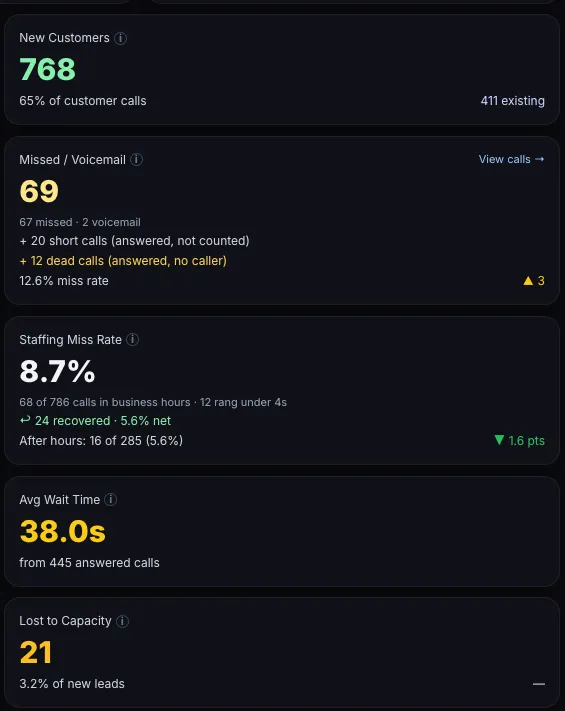
Inbound Intel AI, built on CallRail, reviews inbound calls, web forms, and Local Services Ad leads. It separates likely opportunities from spam, existing-customer calls, and contacts outside your service area.
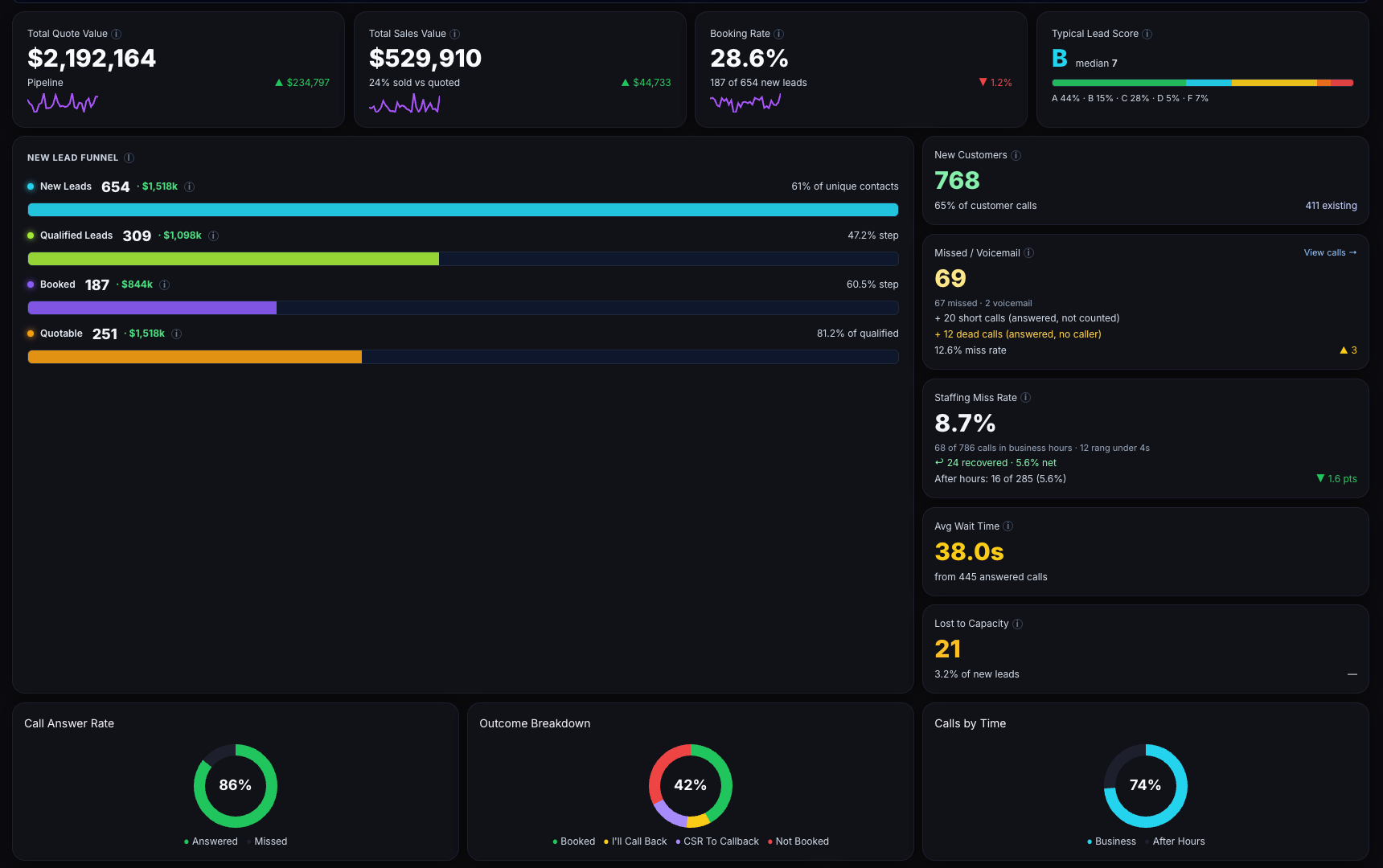
The system records the booking outcome, objections, missed calls, and follow-up. It then connects attributed leads to closed revenue in ServiceTitan, Housecall Pro, or a comparable field service CRM, so you can see sold and quoted value by source, campaign, and ad.
Your report should show whether marketing failed or your office lost the call. Those are different problems with different fixes. If qualified roofing leads are coming in but estimates are not booking, the sales handoff needs attention. If the leads are not qualified, the channel, targeting, or message needs work.
Proof of the Tracking and Optimization System
This is non-roofing proof of the tracking and optimization system, not a forecast for roofers. Mountain Valley Plumbing, a plumbing and HVAC client on the Colorado Front Range, cut monthly ad spend 75% while tracked leads per month rose 2.4x (April to August 2026).
After installation, Instant Estimator AI lifted conversion rates 40% to 60%. That result is not presented as a roofing-client result.
Cody Fuller of Fuller Services, a multi-trade home services company in Muscle Shoals, Alabama, said:
"We've been working with Elevated for about a year, and it's been an excellent experience from start to finish. They completely rebuilt our website, and the end result exceeded our expectations. We now rely on them for all of our digital marketing, and the consistency, communication, and results have been outstanding. Partnering with Elevated has been one of the best business decisions we've made in recent years."
Review our case studies for home service proof. Then book a strategy call to review your current reporting, lead-source visibility, and sales handoff gaps.
What You Invest and What You Keep
A roofing marketing agency should tell you the starting investment, what you own, what happens if qualified leads do not arrive, and whether it works with a competing contractor near you.
Pricing is $2,495 per month, to start. There is no setup fee. No contract: every program is month to month. Ad spend is separate and stays in your own Google and Meta accounts.
Your investment changes with the growth gap you need to close, the number of primary markets, and the size of your service area. It also reflects your channel mix, the number of Google Business Profiles you own, and whether you want aggressive or sustained growth.
What changes the investment
- Your growth goals and the gap we need to close.
- How many primary markets you want to own and the size of your service area.
- Which channels: Google LSA and Google Ads, or Meta Ads on top.
- The number of Google Business Profiles you own.
- Your appetite for aggressive or sustained growth.
You Keep the Assets and the Accounts
You own everything: your website, analytics, Search Console, ad accounts, call data, and every asset we produce.
That matters if you switch agencies or bring roofing digital marketing in house. Your domain, tracking history, campaign data, and site stay with you. You keep the record of what produced calls, inspections, estimates, and signed work.
Qualified leads within 60 days or your next month is free.
The guarantee applies to every program. Your office still needs to answer calls, schedule inspections, follow up on estimates, and have capacity for the work you want.
Grow and Scale include primary zip code exclusivity. We will not take a competing contractor in your primary zip code for as long as you are with us. Kickstart does not include exclusivity, so program fit depends on your market coverage and growth plans.
Know Whether This Is a Fit Before You Book
This program fits roofing contractors committed to growth who answer the phone, follow up on estimates, and want marketing measured against signed work. It is built for owners who need clearer visibility into retail replacement, repair, storm work, commercial opportunities, and the sales process behind each lead.
It is not a fit if your office will not return calls, your crews cannot serve additional leads, or you want guaranteed rankings by a specific date. Search visibility takes time. Strong roofing contractor marketing cannot fix an estimator who never follows up.
Roofing Marketing FAQs
What is digital marketing for roofers?
Digital marketing for roofers is the work of generating, qualifying, and tracking inspection requests through search, ads, your website, follow-up, and local visibility. The goal is signed repair, replacement, restoration, or commercial work, not traffic reports.
A useful roofer marketing program separates each service path and shows which sources produced booked estimates and closed revenue. It should also show where calls were missed or follow-up broke down.
How do roofing leads differ from other home service leads?
Roofing leads usually have wider job values and longer sales cycles than many repair-focused trades. A leak repair may need a quick inspection, while a retail replacement, storm claim, or commercial project can involve several decision-makers and follow-up steps.
That means lead handling must match the job type. A campaign should distinguish repair, replacement, restoration, and commercial inquiries before your team spends estimator time on the wrong opportunities.
How do I get insurance restoration work without making coverage promises?
Market inspections, storm-damage evaluations, documentation education, and responsive follow-up, not insurance outcomes. Your ads and landing pages can explain how your team identifies visible damage and documents findings for the homeowner.
Contractors should not present themselves as public adjusters or promise ACV, RCV, supplements, Xactimate results, coverage, or claim outcomes. Coverage questions belong with the carrier or a qualified insurance professional.
Are Google Local Services Ads worth it for roofers?
Google Local Services Ads can be worthwhile for eligible roofing contractors with the capacity to answer and work leads quickly. They can add visibility for homeowners looking for local help, but the channel is not automatic.
Eligibility, licensing, insurance verification, review management, call-answering, available capacity, and lead quality all affect results. Review lead sources against booked inspections and signed jobs before increasing budget.
How much does roofing marketing cost?
Roofing digital marketing starts at $2,495 per month. There is no setup fee, every program is month to month, and ad spend is separate in your own Google and Meta accounts.
Your investment changes with your growth goals, market count, service area size, channel mix, Google Business Profiles, and appetite for aggressive or sustained growth. Request a strategy call for a scope built around the work you want to sell.
How long does roofing digital marketing take to show results?
Paid campaigns can test demand quickly, while SEO takes longer to build. During days 1 to 90, the work establishes tracking, fixes priority technical issues, and strengthens key service pages. From days 90 to 180, visibility becomes more consistent as additional pages and local authority build.
From days 180 to 365, more pages can reach consistent rankings and lead volume can compound. No honest provider guarantees rankings by a specific date because competition, site condition, market coverage, content capacity, and call handling all affect the pace.
Build a Roofing Pipeline Around the Work You Want
Book a Strategy Call to review your current lead sources, job mix, capacity, and tracking.