
Facebook and Instagram Ads That Fill Your Slow Weeks
Social media marketing and Meta ads for home services use Facebook and Instagram to create demand before homeowners search. We build direct-response campaigns around the services you need to sell when your schedule has open capacity.
This is not organic posting or boosted posts. We track calls and forms so you can see booked jobs and closed revenue.
- Fill slow weeks with planned-demand campaigns
- Promote the profitable services your crews have room to run
- Follow up on every lead with a documented process
- See booked jobs and closed revenue, not just form fills
- Keep ownership of your ad account and every asset we build
Do Facebook Ads Actually Work for Contractors?
Facebook and Instagram ads can work for HVAC, plumbing, and electrical contractors when you have a clear offer, open capacity, and a team ready to follow up.
They are not a replacement for search. They do a different job.
Google Ads and Local Services Ads reach homeowners with a problem today. They are a practical fit for repair work, urgent calls, and high-intent replacement searches.
Facebook and Instagram work for services homeowners can plan, consider, or delay. A homeowner may not think about maintenance, panel upgrades, drain clearing, or system replacement until an ad gives them a reason to consider it.
Meta can support:
- Seasonal maintenance during a shoulder season
- Replacement conversations with financing options
- A service line your crews have capacity to perform
- Retargeting for homeowners who visited your site but did not call
That does not make social a vanity channel. It makes it a channel that needs a clear business reason behind it.
Demand Capture vs Demand Generation
Google Ads and Local Services Ads capture demand. A homeowner searches for AC repair, a plumber, or an electrician because they already need help. Your ad appears in front of that active search.
Meta ads generate demand. They put an offer or replacement message in front of homeowners before a search begins. That makes them useful for planned services and replacement work, not every urgent call.
For urgent repair calls, Google Ads and local SEO should usually carry the heavier load. Those channels reach people actively looking for a contractor.
Paid channels rent attention. Google Ads, Local Services Ads, and Meta can bring leads while the budget is active. Pause the spend, and that visibility stops.
Local SEO is closer to an owned asset. Your service pages, Google Business Profile, reviews, and local visibility can keep working after the monthly work is done.
A balanced plan uses search to capture urgent demand, local SEO to build visibility, and Meta to create demand around a seasonal or operational need.
Why Boosting a Post Doesn't Count
Boosting a post buys visibility for content that may not give a homeowner a clear next step. Facebook and Instagram can show the post to more people, but neither Meta nor the homeowner knows whether the goal is a phone call, estimate request, or appointment.
A real campaign starts with one profitable service, one homeowner problem, one offer, and one defined action. The ad needs to state exactly what you want the homeowner to do.
The creative should make that service feel real. A technician explaining what they found on a call, an owner walking through a completed installation, or suitable before-and-after footage gives homeowners proof they can understand.
Generic stock photos and vague messages about being a trusted local contractor do not do that work. They do not tell Meta who should respond, and they do not tell the homeowner what should happen next.
What to Advertise: Offers That Convert
Audience settings cannot rescue a weak offer. If the service is vague, the value is unclear, or the timing does not match your crews' capacity, Meta can still deliver form fills your office cannot book.
Speak to the concern behind the service. That may be uneven rooms, repeated repairs, an outdated electrical panel, or a drain that keeps backing up. Then use a direct, service-specific call to action that matches the appointment your office needs to book.
The right offer depends on the work you need to generate. An HVAC company with open capacity before summer may promote a pre-season tune-up. A plumbing company may run a drain-clearing offer limited to the cities it serves.
Higher-ticket replacement work needs a different angle. Financing information, a system consultation, or an inspection that gives the homeowner a clear next step can lower the barrier to a high-value project.
Short videos, before-and-after footage, and branded technician content give high-value work visual proof that text ads cannot show as easily.

Filling the Slow Season
Shoulder-season campaigns should match the work you want to sell with the crews you have available. If your HVAC schedule has room before peak demand, maintenance, indoor air quality, and replacement planning may be better fits than broad emergency repair messaging.
A plumbing or electrical contractor may focus on preventive work, upgrades, or inspections homeowners can schedule ahead.
That does not mean discounting every service until the phone rings. Choose an offer that protects your margins, addresses a recognizable concern, and gives your office a clear appointment type to book.
The test is lead quality, appointment rate, booked jobs, and closed revenue by campaign, not likes, comments, or video views.
Targeting Homeowners Without Wasting Spend
Local contractor targeting depends on disciplined audience design and strong creative, not a secret filter that finds perfect homeowners. No honest agency can promise precise access to homeowners by income, home age, or ownership status.
Start with the service area your crews can actually cover. Exclude locations that create long drives, poor-fit calls, or jobs your office will not book. Then use the offer to qualify the homeowner.
Ads related to housing repairs, remodeling, or home improvement may fall under Meta's Housing Special Ad Category. In those cases, Meta restricts targeting options, including ZIP code, age, and gender targeting. An ordinary HVAC repair, plumbing, or electrical service ad does not automatically belong in that category.
Past website visitors can be a useful retargeting audience. Customer lists can also support follow-up when collected and used appropriately. These audiences reach people who already know your company.
Meta's delivery system learns from the actions you track. If you optimize for cheap form fills, it will find more cheap form fills. If you send back qualified appointment and booked-job signals, the platform has better information to find similar prospects.
Use Facebook and Instagram placements together unless campaign data supports shifting budget. The useful comparison is cost per booked job and closed revenue, not which platform sounds more professional.
Lead Forms, Retargeting and the Follow-Up Problem
Facebook leads are not automatically good or bad. Their value depends on the friction in the campaign, how clearly the ad qualifies the homeowner, and what happens after they submit the form.
A native Meta lead form reduces mobile friction and can work well for testing an offer or booking a straightforward appointment. The tradeoff is that a shorter form gives homeowners less context before submitting.
A dedicated landing page gives more room to build trust before the inquiry. You can explain a larger replacement project, show customer proof, answer common concerns, and ask questions that help your office prioritize the lead.
Retargeting shows follow-up ads to people who visited a service page, watched a video, or started an inquiry without completing it. A follow-up ad can reinforce the offer, answer an objection, or give them a clearer reason to book.
A lead only has value if your team identifies it, responds to it, and turns it into a booked job. A homeowner who submits at 2:00 PM and hears back at 4:00 PM may already be speaking with another contractor.
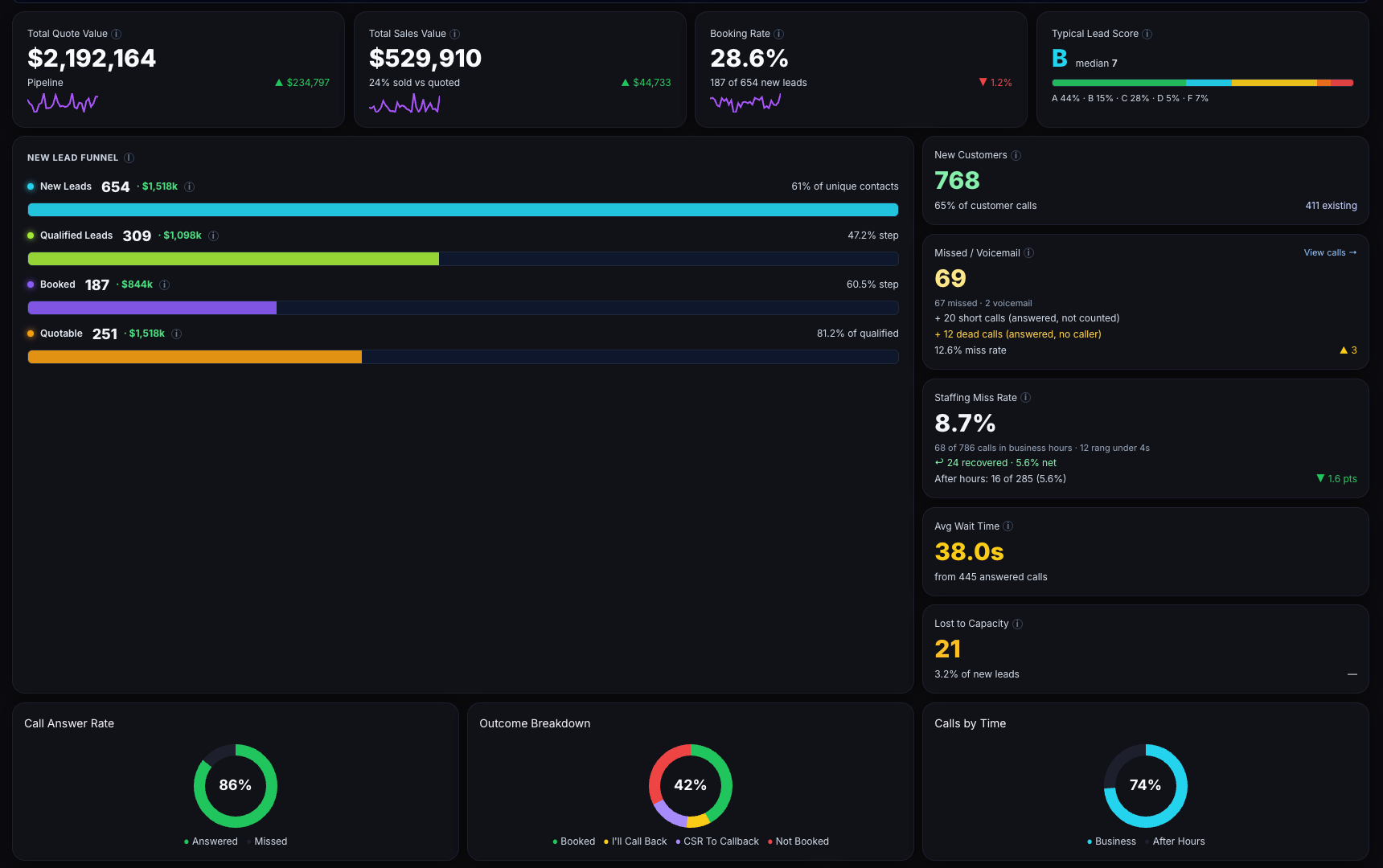
Inbound Intel AI analyzes inbound calls, web forms, and Local Services Ad leads. It scores lead quality, separates real opportunities from spam, identifies missed calls, and records whether an inquiry was booked or lost.
You can see objections raised on calls, booking outcomes, and whether a missed caller was recovered. That distinction matters before you cut budget or add more.
How We Run It as a Meta Ads Agency
A Meta ads agency should manage more than ad setup. The work should connect offer strategy, creative direction, campaign structure, tracking, lead routing, and reporting.
Elevated Audience follows a clear operating sequence built around lead quality and closed revenue:
- Audit your current assets, lead handling, and what happens after a homeowner calls or submits a form.
- Choose an offer and funnel that fit your service mix, capacity, and sales process.
- Build campaigns inside your client-owned Meta account.
- Connect lead and revenue tracking to the campaign data.
- Review lead quality, appointment outcomes, and closed revenue before changing the next budget decision.
Changing agencies does not require you to scrap every campaign. We review what worked, what did not, and what can be repurposed or pruned before deciding what changes first.
On Grow and Scale, we will not take a competing contractor in your primary zip code for as long as you are with us.
The guarantee is written: qualified leads within 60 days or your next month is free.
Frequently Asked Questions
Do Facebook and Instagram ads work for contractors?
Facebook and Instagram ads work best for demand generation, seasonal capacity, clear offers, and a real follow-up process. They can help you promote maintenance, replacements, upgrades, and services homeowners may consider before they search.
They are less useful for replacing urgent search demand. If your office cannot respond promptly or your crews are already full, adding more social leads will not solve the underlying problem.
Should contractors use Meta ads or Local Services Ads?
Local Services Ads capture active search demand from homeowners looking for help now. Meta ads create demand before that search begins, making them useful for planned work, shoulder-season offers, and services with available capacity.
Most contractors should protect their high-intent search coverage first, then use Meta to promote work they want more of.
Should contractors use Facebook, Instagram, or both?
Use both placements at the start, then judge them by qualified appointments and booked jobs. Facebook and Instagram reach homeowners in different contexts, and a placement that produces cheaper leads is not automatically the better placement.
How does retargeting work for home services?
Retargeting shows follow-up ads to people who already interacted with your business. That can include visitors to a service page, people who watched a video, or homeowners who began an inquiry but did not finish it.
The message should match the prior action. A visitor to a replacement page may need customer proof or financing information. An incomplete form may need a simple reminder and a clearer booking step.
Should contractors use a Meta lead form or landing page?
A Meta lead form reduces friction because the homeowner can inquire without leaving Facebook or Instagram. It can work well for a straightforward offer but may produce less-qualified inquiries because the homeowner has seen less information before submitting.
A landing page adds friction but gives you room to explain the service, build trust, and ask better qualifying questions. Compare both paths by booked jobs and closed revenue, not cost per lead alone.
How do you measure Meta leads and what does management cost?
Results are measured through booked jobs, lead quality, cost per lead, closed revenue, and source attribution. Inbound Intel AI analyzes calls and forms, while your CRM connects leads to quoted and sold work.
That shows whether the campaign needs work or your office lost the opportunity. Review the case studies to see how we measure attribution across full programs.
Management starts at $2,495 per month, with no setup fee and no contract. Ad spend is separate and remains in your own Meta account. Meta Ads management is included in the Scale program.
Fill Your Next Slow Week With a Plan
Book a strategy call to review your services, capacity, lead handling, and fit for Meta ads management.