
Book a Strategy Call

Google Local Services Ads for Home Service Contractors

Local Services Ads for Home Services put your company in front of homeowners looking to book work now. Elevated Audience manages them for HVAC, plumbing, electrical, drain and sewer, plus qualified adjacent home-service contractors.

These are agency-managed campaigns, not a Google sign-in page or generic lead reports. We connect lead handling and booked jobs to closed revenue, so you can see what becomes sold work.

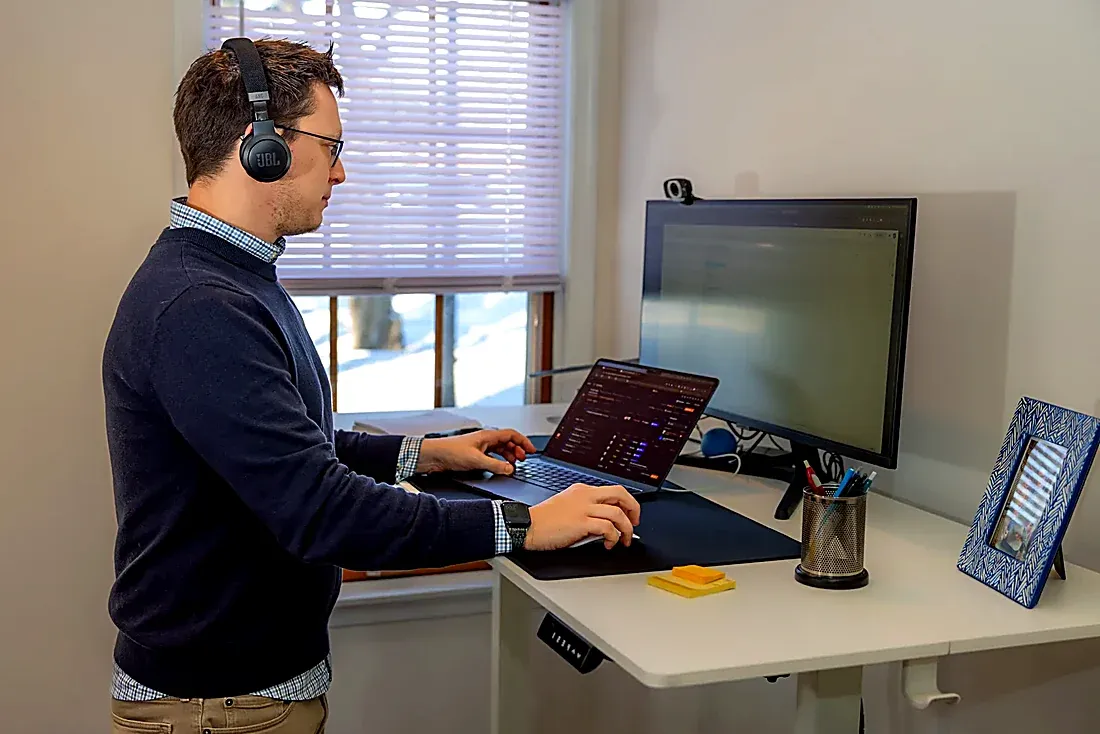
An Elevated Audience strategist reviewing an account during a client call

How Local Services Ads Work for Home Service Contractors

Local Services Ads are Google's local, pay per lead format for eligible service providers. You pay for homeowner contacts, such as phone calls, messages, and available booking actions, instead of paying for each ad click.

That difference matters. A click tells you someone looked. An LSA lead gives your team a person to answer, qualify, schedule, and track through the job process.

Local Services Ads for Home Services fit urgent repair, same day service, maintenance, inspections, and selected replacement work. An AC failure, active plumbing leak, electrical concern, or backed up drain is usually not a research project. The homeowner needs a contractor who serves the area and can take the call.

Google controls category and market availability. Requirements also vary by trade, business structure, and location. A plumbing company and an HVAC company may not have the same service options, documentation requirements, or lead types in every city.

A lead is still not a booked job.

Your LSA plan should reflect the work you want and have capacity to run. If your crew is full on repair calls, narrow the service mix. If replacement work carries the right margin and your comfort advisor can handle more appointments, your profile and intake process should support that goal.

Google Guaranteed and Google Screened Are Now Legacy Terms

Google Guaranteed and Google Screened are legacy search terms. Google consolidated the former badges under Google Verified on October 20, 2025, as described in Google's Local Services verification guidance.

Google Verified indicates that a business completed the verification requirements Google applies to its category. Depending on the category and market, that process can involve:

  • Business verification
  • Registration documentation
  • Insurance records
  • License information
  • Background checks

The exact requirements are Google's decision, not an agency's. Documents must also stay current. An expired insurance certificate, changed license record, or mismatch in business details can limit an account's ability to run.

The badge is not a ranking promise. It does not mean every lead will be qualified, every caller will book, or every campaign will produce profitable work.

The old badge names still appear in contractor conversations and search results, which causes confusion. Google Verified confirms that your business met the applicable verification process. It does not replace dispatch discipline, CSR training, pricing controls, or revenue tracking.

You are paying for direct contacts. You still need to know which contacts became booked jobs and which never had a real chance to close.

Your LSA Profile Needs Ongoing Management

An LSA profile is not a set it and forget it listing. It is a live part of your lead generation system, and its details affect the calls your team receives.

Your selected services should match your actual service mix. Your service area should reflect where technicians can run profitable work. Business hours need to match the people available to answer, especially if you advertise urgent repair or same day service.

Photos and reviews matter because homeowners see them while deciding who to contact. Your linked Google Business Profile also needs accurate categories, hours, service details, and business information. Conflicting details between your profile and LSA account create confusion for Google and the homeowner.

Most LSA problems are operational before they are advertising problems.

A campaign can generate a direct call, but your office still has to answer it, confirm the service area and job type, then offer an appointment. If the caller reaches voicemail or your CSR cannot handle the request, the lead cost does not disappear.

Reporting should go further than lead volume. Track cost per lead, lead to booking rate, cost per booked job, quoted value, sold value, and why calls were lost. A low booking rate can point to poor lead fit, but it can also show that the front desk needs a better process.

Those problems need different fixes.

Your broader local presence supports this work. Accurate Google Business Profile management helps homeowners find consistent information across local search, Maps, and your ad profile.

LSAs work best when you have a defined service mix, real capacity to accept work, current licenses and insurance where Google requires them, and someone accountable for the phone.

We will review your account setup, service selections, and intake gaps that determine whether LSA contacts become booked work.

LSA Management Depends on Your Operations, Not Just Your Lead Budget

Effective LSA management depends more on accurate account settings and field operations than on endlessly adjusting a maximum cost per lead. If your services, coverage area, hours, or phone routing are wrong, more demand creates more bad calls and missed opportunities.

Google began migrating selected United States home and storefront service advertisers into Google Ads in August 2026. Additional groups move later in 2026, with remaining categories and accounts outside the United States planned for 2027, according to Google Ads migration guidance.

Migrated campaigns are managed as specialized Performance Max campaigns with pay per lead goals. They retain Search and Maps placements and keywordless service area targeting. They are not standard Performance Max campaigns built around product feeds or broad keyword strategies.

Your account setup determines the leads you are positioned to receive.

Your Account Foundation Determines What Homeowners See

Google Business Profile synchronization comes first. Your business name, address, phone number, hours, service areas, and category information need to match across the profile and LSA account. A homeowner should not see one set of hours in Maps and another in the ad.

License and insurance documentation also need active review. Google can require different records by trade, business structure, and market. Expired coverage, outdated license details, or mismatched business information can create verification problems and restrict lead flow.

Elevated Audience audits the details homeowners see before increasing demand. That includes current photos, service areas, business hours, contact routing, and the services your team can reliably deliver.

Your profile should sell the work you want to run, not every job your trade could possibly perform.

Remove services that produce low value calls, unprofitable dispatches, or work your team cannot schedule quickly. An electrician with panel upgrade capacity should not let a broad service menu bury that opportunity under calls for work the company does not want.

Service and Capacity Controls Protect Your Margin

LSAs are keywordless. You do not control relevance with a negative keyword list as you would in Google Search Ads. Google uses your categories, service types, coverage area, schedule, and profile information to decide which homeowner requests fit your business.

That makes service selection a business decision, not a checkbox exercise.

Elevated Audience enables job types selectively based on the revenue threshold that fits your operation. If a service produces low ticket calls, long drive times, and poor booking rates, it may not belong in the active account. If another service produces profitable work and your crew has room for it, the account should give it proper exposure.

Capacity changes through the year. HVAC repair demand shifts with temperature. Plumbing calls can rise during freezes. Electrical work can depend on storm activity, renovation cycles, and crew availability. Your account should reflect what dispatch can support this week, not what made sense six months ago.

Weather also changes the services homeowners request. A service mix that supports cooling repair during a heat wave may need to shift toward maintenance, replacement, or another profitable line during a shoulder season.

Service areas need the same discipline. A wide radius can look appealing until technicians spend paid hours driving to low value calls outside efficient routes. We prune weak areas and keep coverage where response times, job value, and close rates support the cost.

Some businesses need separate campaigns. Drain clearing, repiping, and HVAC replacement can have different ticket sizes, capacity limits, and lead handling processes. Combining everything into one setup hides those differences.

Missed Calls Can Create a New Billable Lead Risk

Beginning October 1, 2026, a missed call during your listed business hours can become billable if the caller remains connected for more than 20 seconds. As of September 17, 2026, that change is upcoming under Google's Local Services Ads policies.

A missed call is no longer just a front desk problem. It can become an advertising cost.

Your posted hours must match staffed coverage. Your routing needs regular testing. Dead air should be short, and overflow coverage needs a clear owner when the primary CSR is busy, at lunch, or off the clock.

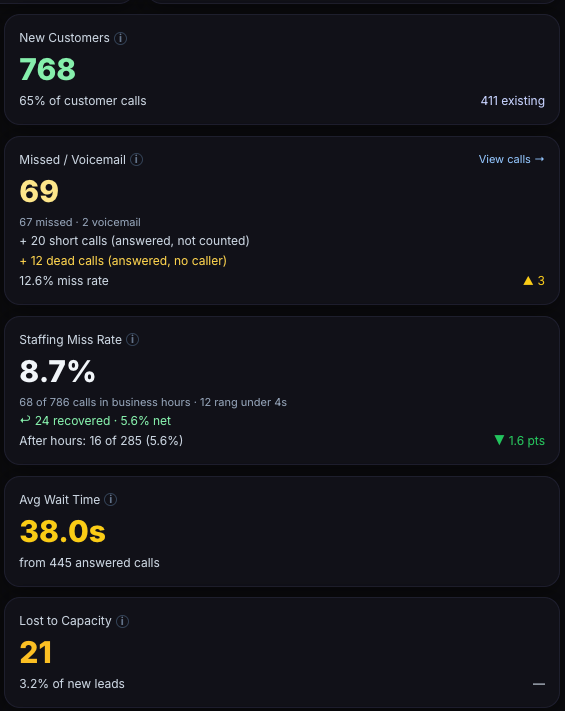
We review call records to identify routing failures, unanswered calls, poor service fit, and callers outside your coverage area. Inbound Intel AI separates missed calls, voicemails, short calls, and recovered callers so you can see where the lead was lost.

A key press IVR can change when the timer begins. That may help some operations, but a complicated phone tree can frustrate a homeowner who needs service. The goal is a clear handoff to a person.

Google's automated credits are not a substitute for correct service and area settings. If your profile attracts calls you cannot take, disputing charges afterward does not fix the operational problem.

Before your assigned migration date, export historical performance records. Old reports do not automatically carry over into the migrated campaign view.

We will review your service configuration, call path, and lead quality issues affecting booked work.

Inbound Intel AI call capacity view showing missed calls and staffing demand
Inbound Intel AI · Call capacity. Captured reporting example.

Closed Revenue Is the LSA Scorecard

The useful LSA metric is not the number of charged contacts. It is the path from lead to qualified opportunity, booked appointment, job sold, and closed revenue.

Too many agency reports stop at impressions, calls, messages, or cost per lead. Those numbers can help diagnose performance, but they do not tell you whether your ad budget produced profitable work. A low cost per lead is not a win if your CSRs cannot book the calls or the jobs never sell.

A paid contact only matters if you can trace it to completed work.

You need to see whether the issue started with targeting, service selection, response time, the phone conversation, or the estimate process. Each problem requires a different fix.

Inbound Intel AI Shows Where the Lead Was Lost

Inbound Intel AI is Elevated Audience's proprietary platform, built on CallRail. It analyzes inbound calls, web forms, and Local Services Ad leads to identify the contacts worth pursuing.

The platform scores lead quality and separates real opportunities from spam, existing-customer calls, and requests outside your service area. Your office should not be judged on leads that were never viable. Your ad budget should not be judged by raw contact volume alone.

It also grades CSR performance, including objections raised during the call, booking outcomes, missed calls, and follow-up activity. If a homeowner called for AC repair, received no answer, and booked another company, that is not an ad problem. It is an operational leak you can address.

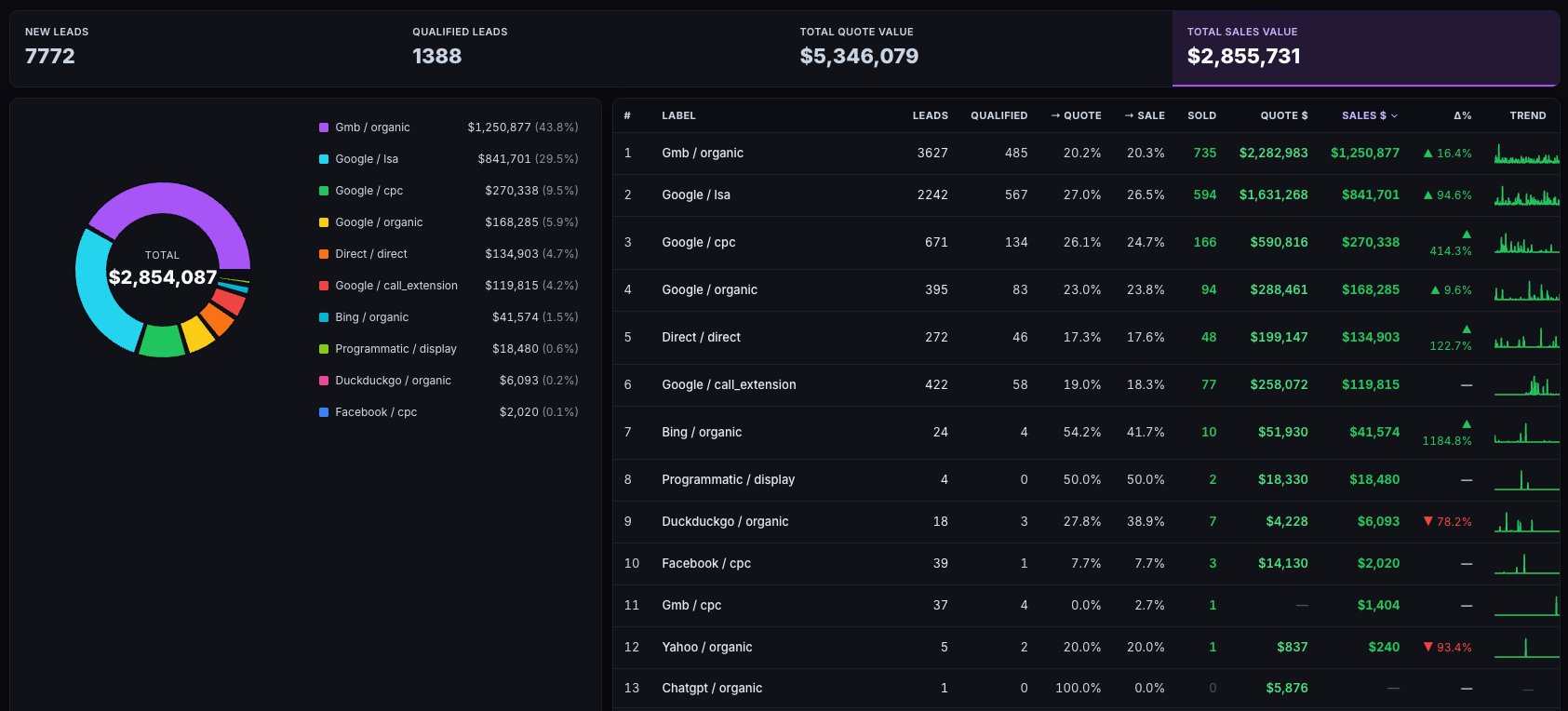
ServiceTitan, Housecall Pro, or a comparable field-service CRM supplies the other half of the record: the closed job. Inbound Intel AI matches the lead to quoted and sold value, so you can connect the source, campaign, and service line to revenue.

The result is an operations report, not a marketing slideshow. It shows whether targeting failed or your front desk lost the call.

Inbound Intel AI source attribution connecting leads, qualified opportunities, and sold revenue
Inbound Intel AI · Source revenue attribution. Captured reporting example; separate from the Fuller Services case study below.

Review Each Service Line on Its Own Economics

LSA management needs a regular review rhythm because service demand, staffing, and job value change. We review the following by source and service line:

  • Charged status and lead type
  • Response and booking outcomes
  • Job value and cost per booked job
  • Closed revenue

Emergency repair calls, maintenance appointments, and replacement opportunities should not be evaluated as identical lead types. A same-day plumbing call may need immediate dispatch. A routine tune-up may be scheduled days out. A high-ticket replacement may require a different intake process and a comfort advisor who can run the appointment properly.

This matters when deciding where additional budget belongs. A service line can generate plenty of leads while producing weak booked-job results. Another may cost more per contact but create stronger sold revenue because the work carries a higher ticket and closes well.

Direct bookings can add another layer. Where an eligible booking connection is available, those appointments still need to be measured as paid LSA leads against completed work. A booked slot is progress. Closed work is the score.

Weekly and monthly reviews give you enough data to make decisions without reacting to every single call. That is how you find the service lines worth expanding and the ones that need tighter settings, better call handling, or less budget.

Fuller Services Shows What Revenue Attribution Can Prove

The right measurement system makes channel decisions clearer. Fuller Services generated a 14.5x return from Local Services Ads during the November 2025 to August 2026 case study window.

Fuller Services is an HVAC, plumbing, and electrical contractor serving Muscle Shoals and Athens, Alabama. This result applies to that company, channel, and study period. It is not a universal benchmark for every contractor, market, service mix, or front desk.

Cody Fuller of Fuller Services said:

"We've been working with Elevated for about a year, and it's been an excellent experience from start to finish. They completely rebuilt our website, and the end result exceeded our expectations. We now rely on them for all of our digital marketing, and the consistency, communication, and results have been outstanding. Partnering with Elevated has been one of the best business decisions we've made in recent years."

Cody Fuller, Fuller Services, Muscle Shoals, AL

We will review your existing lead sources, CRM visibility, call handling, and the service lines that should receive more LSA budget.

Local Services Ads vs. Google Ads: Use Both for Different Jobs

Local Services Ads and Google Ads are not substitutes. LSAs are built for eligible local providers and bill for valid direct leads. Google Ads gives you more control over the searches, messages, landing pages, and service-specific campaigns you buy.

The right split depends on the work you want, your available capacity, and what happens after the phone rings. Treating these channels as an either-or decision can leave profitable demand uncovered.

Contractor decisionLocal Services AdsGoogle Ads
Billing modelPay for valid direct leadsPay for clicks and manage conversion cost
Targeting controlService types, coverage area, hours, and profile signalsKeywords, negative keywords, audiences, locations, schedules, and devices
PlacementLocal Services placements in Google Search and MapsSearch results and selected Google inventory
VerificationRequires Google's applicable business verificationNo LSA verification requirement
Lead pathCalls, messages, and available booking requestsCalls, forms, landing pages, and campaign-specific actions
Service selectionDefined services your team can scheduleService lines needing separate offers and query control
Conversion destinationYour LSA profile and connected contact pathYour website and dedicated landing pages
Best fitImmediate service demand with staffed phone coverageHigh-value work, promotions, branded searches, and tailored offers

Both channels require accurate service areas, current business information, and real phone coverage. The difference is where you have control and how much of the homeowner journey you can shape.

When Local Services Ads Should Lead

LSAs should lead when homeowners need immediate help and your team can take the call. Repair work, urgent drain issues, electrical service calls, inspections, and other clear service requests often fit this format.

Homeowners using LSAs usually want a qualified company that serves their address and can offer an appointment. Your selected job types, reviews, profile quality, business hours, and phone handling carry much of the weight that keywords and ad copy carry in a Search campaign.

LSAs do not offer the same keyword control as Google Ads. You cannot rely on a negative keyword list to filter every weak query.

That makes these account details especially important:

  • Services your team wants to perform
  • Areas your crews can serve profitably
  • Hours when someone can answer or respond
  • Reviews and profile information that match your business
  • Phone routing that reaches the right person

If you enable work your team cannot schedule or serve profitably, the account can send the wrong calls to the office. If nobody answers during listed hours, the lead-handling problem starts before marketing has a chance to work.

Your Google Business Profile should also match the account. Inconsistent hours, categories, phone routing, or service details can confuse homeowners and weaken local visibility.

When Google Ads Should Carry More of the Load

Google Ads should carry more of the budget when a service needs a tailored message and dedicated landing page. Replacement campaigns, panel upgrades, repipes, financing offers, maintenance promotions, and branded search campaigns often need more control than an LSA profile provides.

You can choose the searches that matter, block irrelevant queries, adjust messaging by season, and send visitors to a page built around one service. That matters when job values, close rates, and sales processes differ across your service lines.

Google Ads also helps protect branded demand. A homeowner who searches your company name after seeing a truck, referral, review, or direct mail piece should find your business before a competitor's ad.

Paid search is rented visibility. You pay for placement, and it stops when the spend stops.

That does not make it a bad investment. It makes paid search useful for fast demand capture, controlled testing, and filling gaps while your organic presence grows. Google Ads management gives you campaign control, while local SEO builds an owned search asset through your website and Google Business Profile over time.

Search campaigns can also show which services, messages, and landing pages produce booked work. Those findings should inform the pages and local visibility you build for the long term.

Build a Blended Budget Around What Your Business Can Fulfill

A blended decision starts with operations, not platform preference. Allocate budget based on capacity, margin, lead-to-job close rate, average job value, and how reliably your team answers the phone.

A high-margin replacement service may justify more Google Ads spend because a dedicated landing page and financing message can support its sales process. Same-day repair work may deserve stronger LSA coverage if dispatch has open slots and your CSR can book calls quickly.

No channel fixes a front desk that does not answer calls or a business that cannot serve the selected area.

Compare LSA performance against cost per booked job and closed revenue, not cost per lead alone. A lower-cost contact is not better if it produces weak appointments, low-value work, or jobs that never sell. Apply the same standard to Google Ads.

Your reporting should identify where the breakdown occurred. The issue may be service-area mismatch, voicemail, poor call handling, landing-page conversion, or estimates that do not close. Moving budget without finding the problem only hides it.

We will identify whether your immediate constraint is LSA readiness, Google Ads coverage, Google Business Profile accuracy, landing-page conversion, or call handling. Qualified leads within 60 days or your next month is free.

Clear Pricing, Ownership, and Fit Before You Commit

Our programs start at $2,495 per month. There is no setup fee and no contract. Every program is month to month, and ad spend is separate in your own Google and Meta accounts.

Your investment changes based on the growth gap you need to close, the number of primary markets you want to grow, and the size of your service area. Channel mix also matters. A contractor running Local Services Ads and Google Ads has different needs than one adding Meta Ads, multiple Google Business Profiles, or a larger local SEO program.

The scope should match the work your crews can fulfill, the markets you want to grow, and the lead volume your office can handle.

What changes the investment

  1. Your growth goals and the gap we need to close.
  2. How many primary markets you want to own and the size of your service area.
  3. Which channels: Google LSA and Google Ads, or Meta Ads on top.
  4. The number of Google Business Profiles you own.
  5. Your appetite for aggressive or sustained growth.

What Your Management Relationship Can Include

One channel can create leads, but it rarely solves the full growth problem. If your website does not convert, your reviews are thin, or your office cannot connect calls to booked jobs, adding more ad budget will not fix the bottleneck.

Your program can connect the parts of homeowner acquisition and follow-through:

  • Local Services Ads and Google Ads management
  • Local SEO and website conversion work
  • Legitimate review generation and reputation support
  • Automation and attribution reporting

Review generation means asking real customers for feedback after completed work. It supports homeowner trust and strengthens the accurate profile data Local Services Ads rely on. Elevated Audience will not buy reviews or use fake ones.

The scope should follow your actual constraint. You may need better demand capture, a stronger website, clearer local visibility, or a better way to measure what happens after the phone rings.

You Own the Accounts and the Work

You own everything: your website, analytics, Search Console, ad accounts, call data, and every asset we produce.

Your accounts stay in your name. If you leave, you do not lose the website you paid to build or the historical data needed to understand your marketing. You keep the foundation instead of starting from zero with another agency.

Switching does not automatically mean rebuilding every campaign and page. The first step is a review of what worked, what did not, and which assets should be repurposed or pruned. A strong service page, functional tracking setup, or useful campaign history may be worth keeping.

Weak pages, wasted spend, and broken reporting should not come with you just because they already exist.

Clear reporting should show whether the limiting issue is the lead source or the intake process. If qualified calls come in but nobody answers, calls back, or books them, changing campaigns will not solve the real issue. If leads fall outside your service area or service mix, that is a marketing and account-setting problem.

You need both answers before deciding where the next dollar goes.

Who Gets the Most From This Partnership

Elevated Audience is built for home-service contractors, especially HVAC, plumbing, electrical, and drain and sewer businesses. The core fit is a company generally doing $2M or more in annual revenue where the owner is no longer running calls every day.

At that stage, growth depends on more than keeping one technician busy. You need reliable demand, a staffed office, clear capacity by service line, and reporting that identifies which marketing produces closed work.

Growth-committed contractors from $750k in annual revenue can also be a fit. The deciding factor is not only current revenue. You need the operational discipline and intent to grow without letting leads die at the front desk.

This is not a fit for contractors who do not answer their phone, do not call leads back, or are not committed to growth. Marketing can create opportunities. It cannot make an office return calls or make a business ready to add work.

Multi-location groups and businesses above $15M receive a custom scope. More markets, service lines, systems, and internal stakeholders require a plan that reflects the operation.

Local Services Ads FAQ

What are Local Services Ads for home services?

Local Services Ads are Google's pay per lead format for eligible home service providers. They generate direct homeowner contacts through calls, messages, and, where available, booking requests instead of charging for ordinary ad clicks.

Local Services Ads for Home Services are keywordless. Google matches demand based on your selected services, service area, business hours, and profile information. That makes accurate service settings, current business details, and staffed phone coverage central to lead quality.

Is Google Guaranteed the same as Google Verified?

No. Google Guaranteed is a legacy term. On October 20, 2025, Google replaced Google Guaranteed, Google Screened, and License Verified by Google with Google Verified, according to Google's LSA verification guidance.

Google Verified shows that an eligible advertiser completed Google's applicable screening requirements. It does not guarantee rankings, lead quality, booked jobs, or the former money-back program associated with Google Guaranteed.

How much do Local Services Ads cost?

Google charges for valid leads, not ordinary clicks, but there is no universal Local Services Ads cost per lead. Your cost depends on the market, service type, competition, availability, lead type, and account settings.

Google ad spend is separate from management. Elevated Audience starts at $2,495 per month, with no setup fee and no contract. The profitable decision comes from tracking lead-to-booked-job rate and closed revenue, not assuming every contact should cost the same.

Will Google charge for missed Local Services Ads calls?

Beginning October 1, 2026, a missed call received during the business hours shown on your account can be billable when the caller stays connected for more than 20 seconds. As of September 17, 2026, this is an upcoming rule under Google's LSA policies.

Match listed hours to actual staffing. Test call routing, maintain answer coverage during open hours, and review missed calls regularly. A paid lead that reaches voicemail may be both a lost booking opportunity and an avoidable advertising cost.

Are Local Services Ads moving into Google Ads?

Yes. Selected United States home and storefront service advertisers began migrating in August 2026. Migrated accounts use specialized Performance Max campaigns with pay per lead goals, limited to Search and Maps placements.

The campaign is still built around service areas and selected services, not standard keyword targeting. Save your historical reporting before your assigned migration date because older performance reports do not transfer automatically. Google outlines the process in its Google's migration guidance.

Should my home service company use Local Services Ads or Google Ads?

Most established contractors need both. LSAs fit eligible, high-intent local demand, while Google Ads gives you more control over search terms, service-specific landing pages, campaign messaging, and the work you want to promote.

The right split depends on service margins, open capacity, call handling, and tracked results after the lead arrives.

We will review the channel mix that fits your operation and identify what is producing booked jobs and closed revenue.

Connect Your LSA Leads to Closed Revenue

We will review the channel mix that fits your operation and identify what is producing booked jobs and closed revenue.